It starts with a sentence
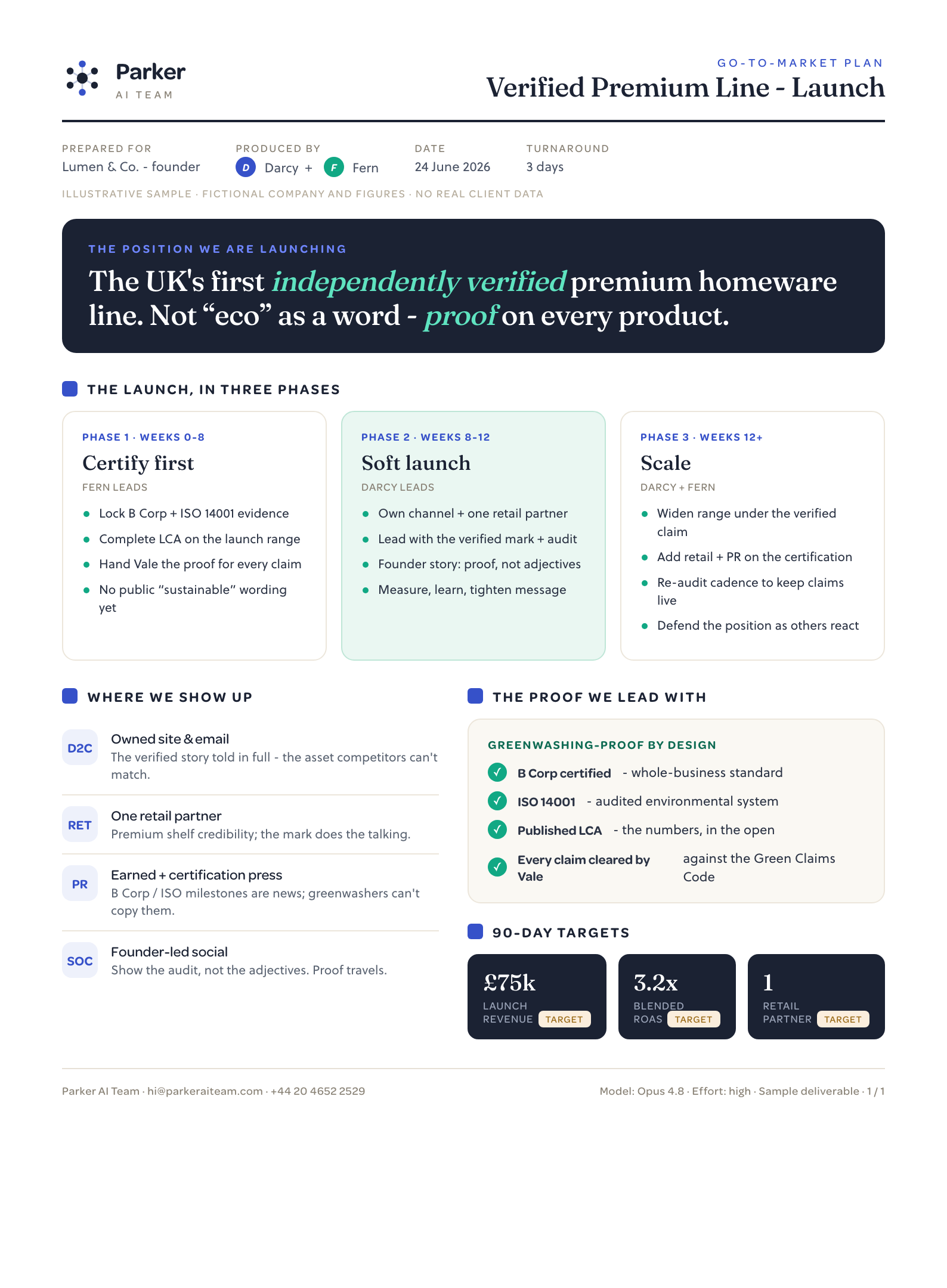
Lumen & Co. sells sustainable homeware. The founder doesn't write a brief or book a workshop. They ask one question. Lennox - the research specialist - picks it up and returns a decision-grade competitive scan the same day: the market sized, every competitor mapped, and an open gap marked in teal. Each claim is labelled by how solid the evidence behind it is.
One question, the whole team responds
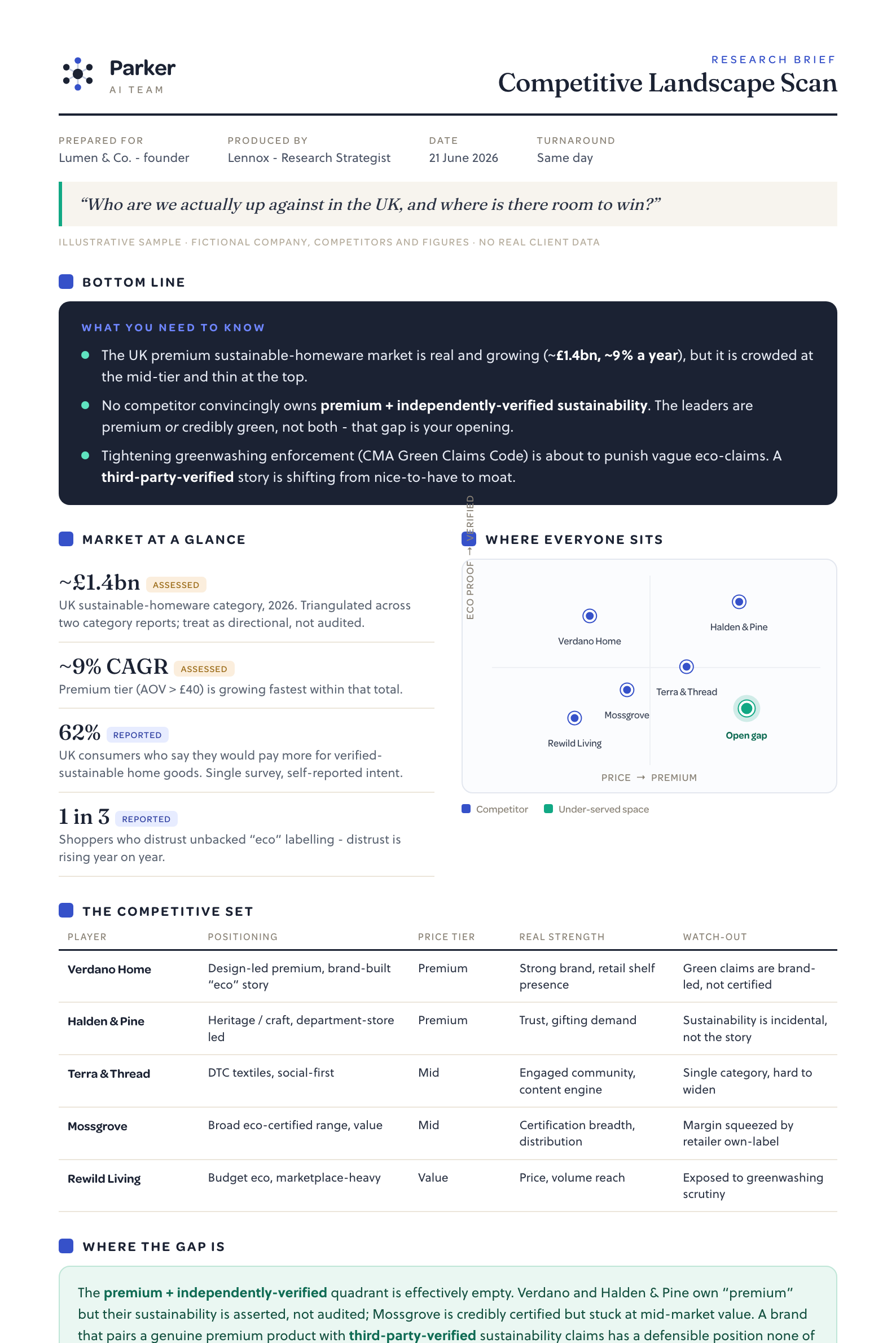
This isn't a research question any more. So the orchestrator pulls in more specialists at once - Avery, the accountant, on cost and margins, Lena on the go/no-go, Vale on the legal exposure Lennox flagged, Darcy on how you'd launch - and synthesises them into one decision brief with a single recommendation. Not a stack of documents to reconcile. One answer, with every contributor visible.
The verdict: go. But it surfaces a catch - the whole plan depends on an expertise the team doesn't yet have.
When you need an expert you don't have, the team hires one
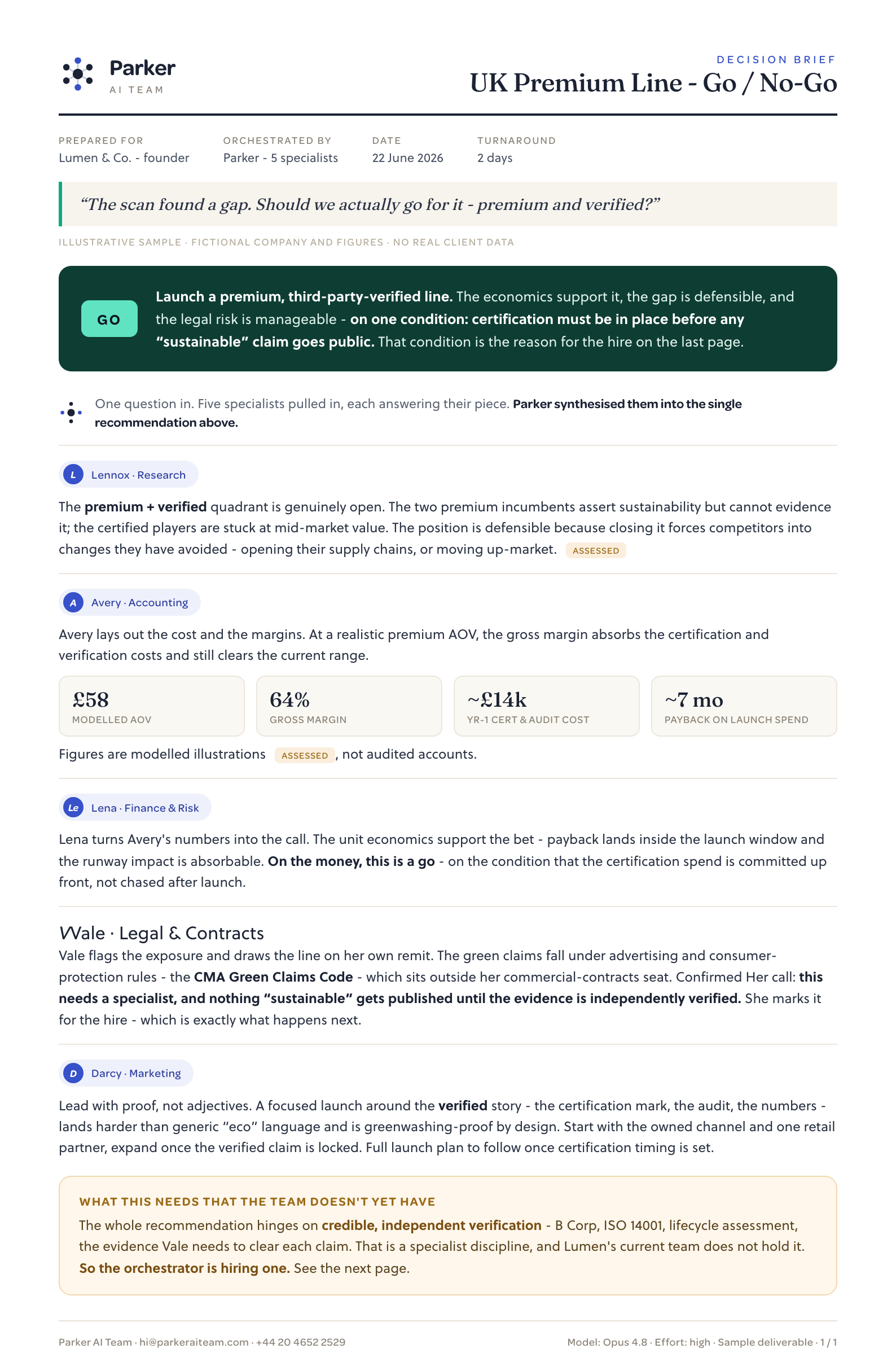
The decision hinges on credible, independent verification - certification, lifecycle assessment, the evidence to clear every green claim. Lumen's team doesn't hold that skill. A normal agency would tell you to go find a consultant. Parker does something no chatbot can: it hires the exact expert the job needs.
Quinn researches what a world-class sustainability-certification expert actually knows. Charlie builds the persona and onboards her. Fern - Sustainability & Certification Lead - joins Lumen's team the same day. Watch the tree on the left: she just appeared on it.
The expanded team takes it to market
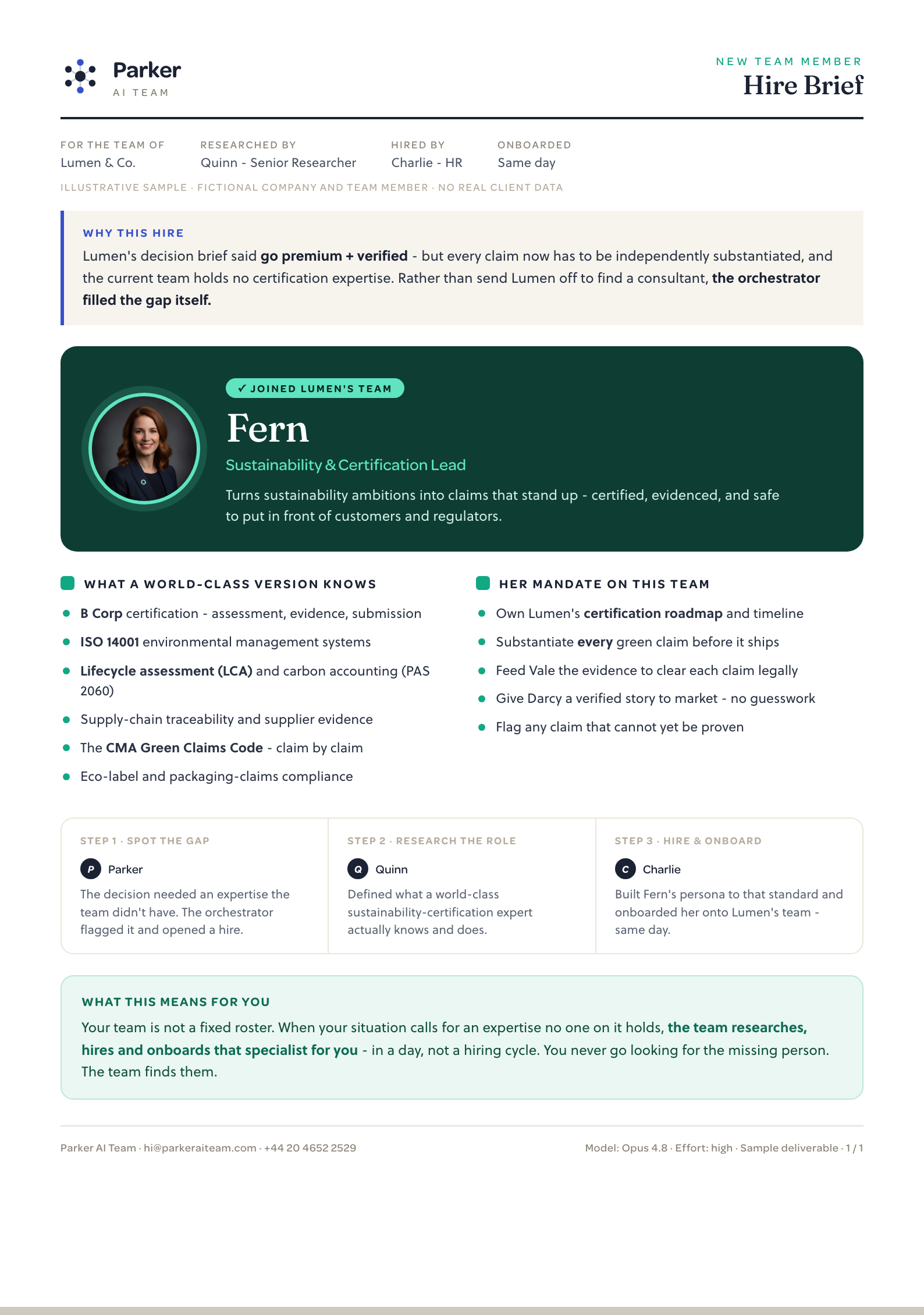
Now the work finishes itself. Darcy and Fern build the launch together: certify first, then a soft launch that leads with proof rather than adjectives, then scale - a position greenwashing competitors structurally cannot copy.
Lumen started with one question and one specialist. It goes to market with a team of six - every one of them added because the work called for it, not because a package said so.